

Why Your Eye Sees Less Sharply After an Hour
The eye is an instrument that tires, without an error message. Why your color judgment dulls after an hour — and with which simple rules you take critical decisions at the right moment.
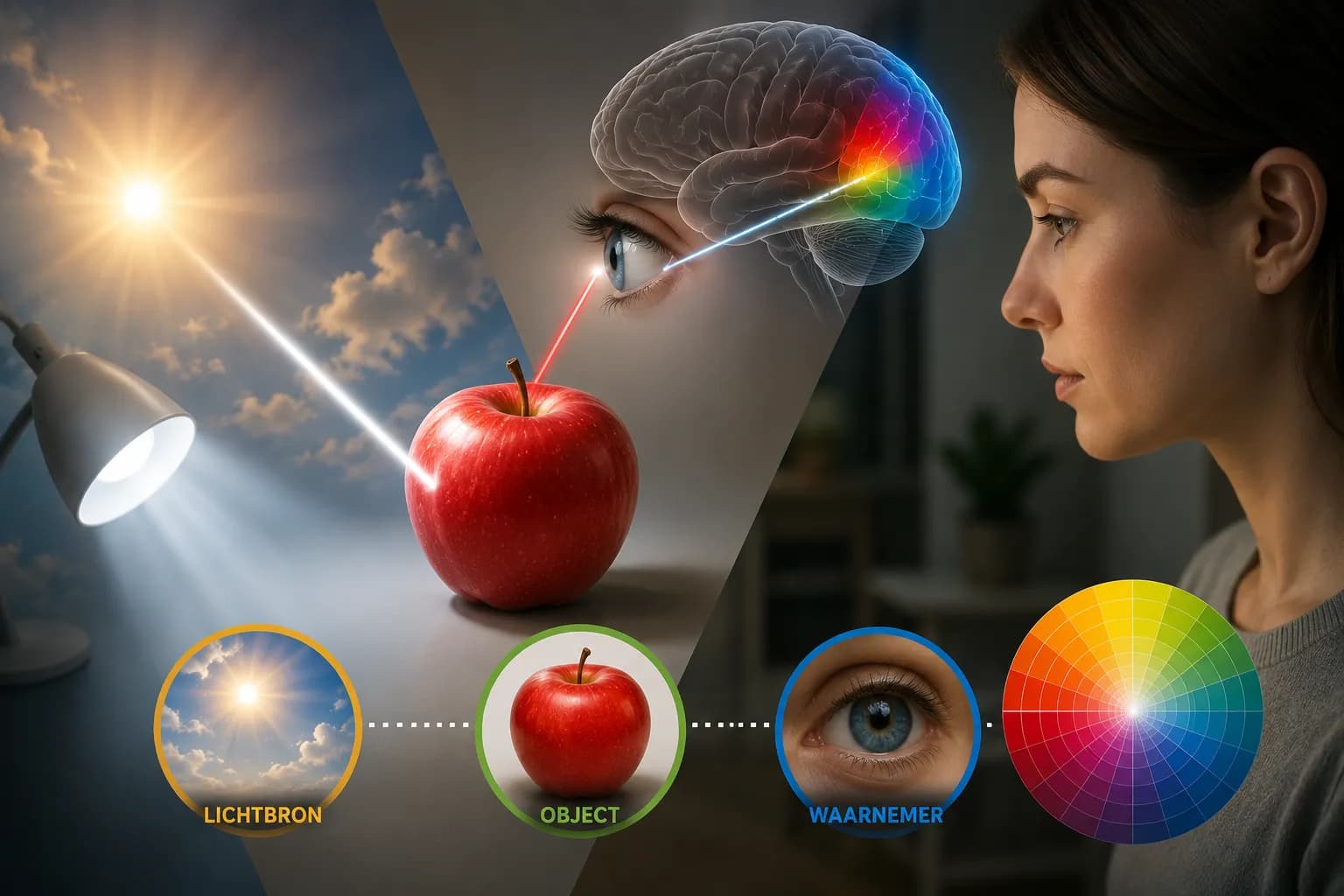
What Is Color, Actually? (And Why It Is Not in the Object)
Color is not a property of the object but a perception. Discover the three ingredients — light source, object, observer — and the three knobs hue, lightness and saturation.
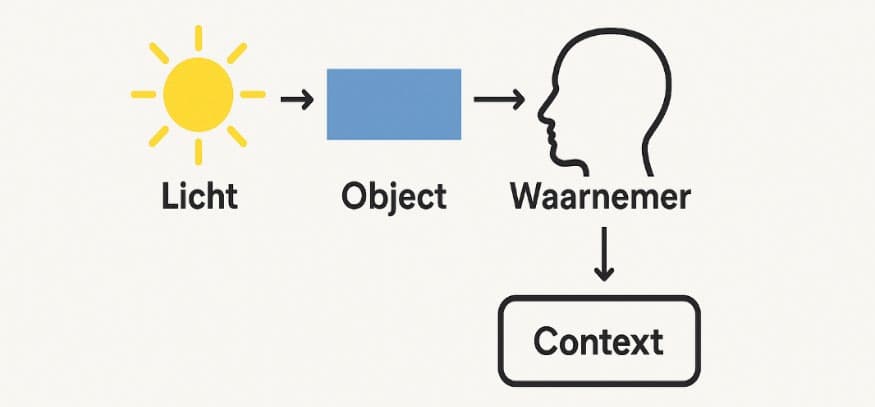
Understanding Color Perception: Four Factors That Determine Every Assessment
Color is not a property of an object, but a perception. Four factors — light source, object, observer and context — together determine what we see. Understand these components and take control of your color assessments.
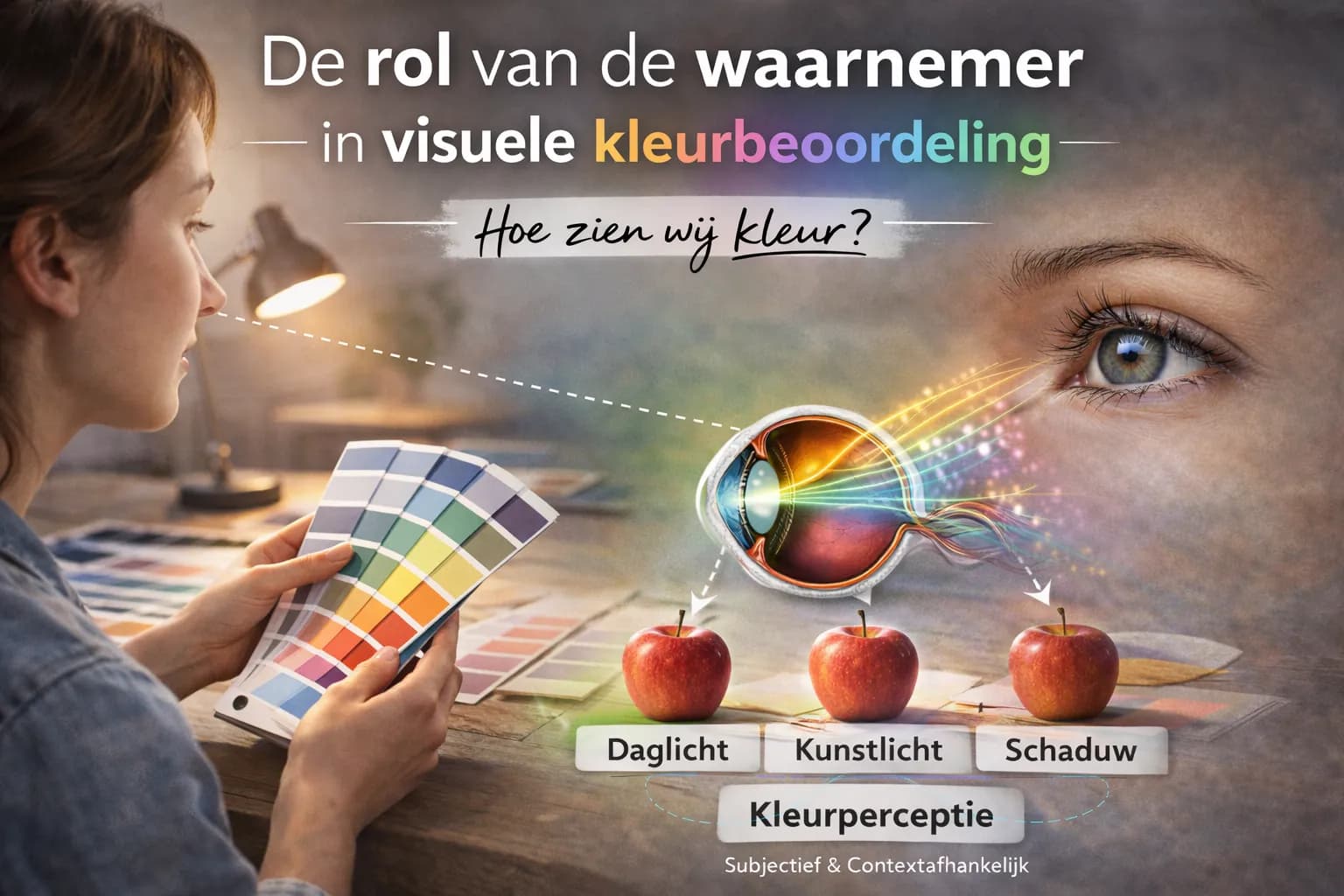
The Human Visual System: Why No Two Assessors See the Same
The human visual system is not a calibrated measuring device. Cone variation, color blindness and age effects mean that no two assessors perceive identically. Understand the biology behind color assessment.
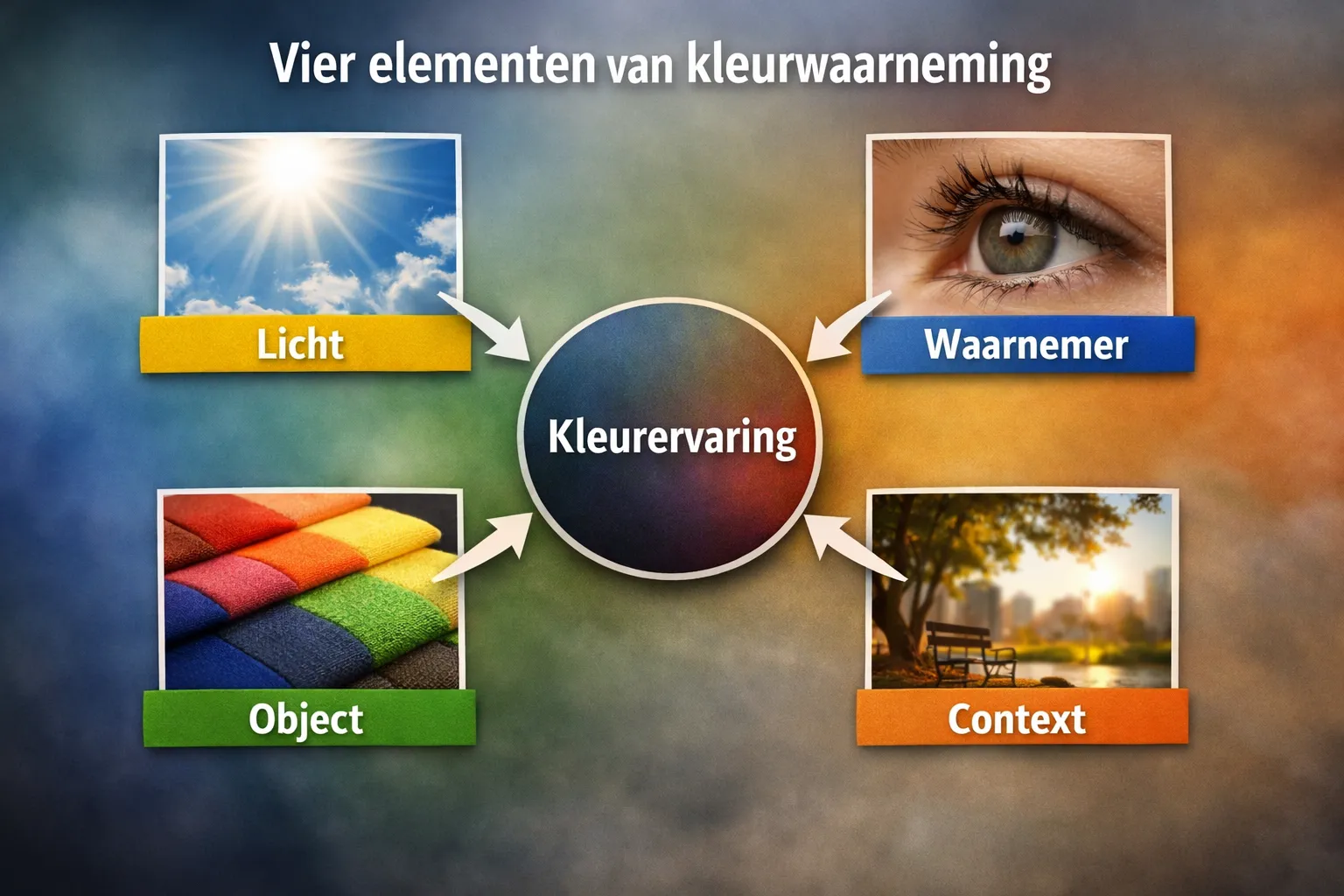
Color Does Not Exist: The Four Elements That Determine Color Perception
A fundamental insight that forms the basis for every professional color assessment. Color is not a property of the product, but a perceptual phenomenon that arises from the interplay of four elements.

Why Don't We Find the Green House Beautiful?
Apple green is a beautiful color in nature. But on a house? Why color association determines whether we accept a color on a building — and what that says about color policy.

Everything Is Possible, But Not Everything Is Beautiful or Appropriate
All colors can be combined, but not every combination is functional or pleasant. Why color harmony is not a matter of taste, but of physiology and craftsmanship.
The Role of the Observer in Visual Color Assessment
Visual color assessment depends entirely on the observer. Learn everything about color vision testing, individual variations, training requirements, and environmental factors for reliable visual evaluation.

Contextual Color Perception: How Environment Influences Color
Color perception is context-dependent. Identical color samples can appear different due to background color, light, or spatial configuration. Simultaneous contrast amplifies differences - a gray on red appears greener. Discover how context influences color assessment.

Color and Architecture: The Exterior
Color influences how we perceive buildings — from apparent size to spatial rhythm. How does this work and what principles underlie it?
Can I Trust My Visual Assessment Ability?
The human eye can distinguish millions of color nuances, but is not reliable enough for color-critical assessments without tools. Learn which factors influence visual color perception.

What Requirements Must an Assessor Meet to Properly Assess Colors?
Visual color assessment requires more than just good vision. This article describes the four most important requirements that a professional color assessor must meet.

Must-Read: Our 5 Most-Read Blogs of the Past Year
Knowledge about color is never complete. These are the five most-read blogs of the past year: from color constancy to the impact of color on consumer behavior.
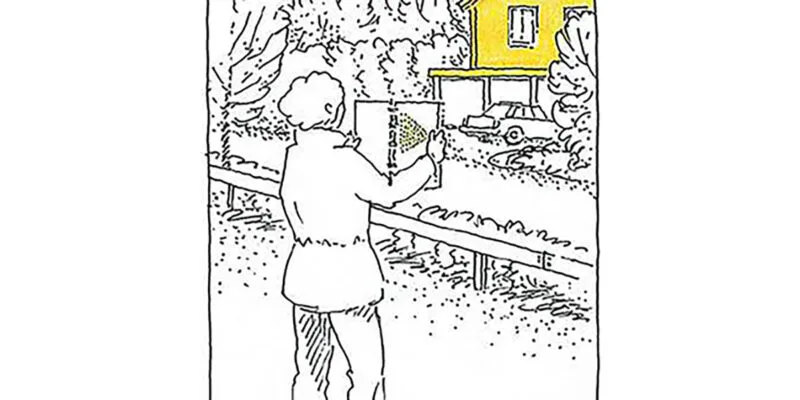
You Can Measure Color Perception
Color continuously changes due to light, distance, and context. This article explains how inherent, perceptual, and identity colors relate and how color perception can be measured.

The Mysterious Side of Color: Color Constancy
Color constancy is the ability to perceive a color as stable under different light sources. This article explains how this mechanism works and why it is essential for professional color assessment.

The Role of Senses in Color Assessment
Color perception is more than just seeing. Our senses work together when experiencing color. This article explains how touch, smell, hearing, taste, and sight contribute to color assessment.

What You Need to Know as a Color Specialist About Visual Color Assessment
Visual color assessment is essential for color specialists. This article describes the five most important factors: perception ability, lighting conditions, material, senses and color notation.

The Effect of Light on Color
Color perception is directly dependent on the light source. This article explains why two identical facade panels can show visually different colors, despite identical measurements.