
Colorimetry is the science of making color measurable: it translates what a standard observer sees into numbers that professionals can use to specify and compare colors unambiguously. Its foundation was laid by the CIE, whose XYZ tristimulus values form the system from which later color spaces such as CIELAB were derived.
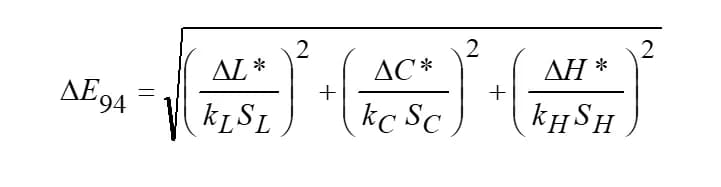
The four-part CIELAB series in this knowledge base builds up that story step by step. CIELAB: The Basis of Color Measurement (Part 1 - CIE and XYZ) covers the origins of the system, the role of the CIE, and the XYZ tristimulus values. CIELAB: From XYZ to x,y,Y and MacAdam Ellipses (Part 2) shows why the x,y diagram is not perceptually uniform, as MacAdam demonstrated with his famous ellipses. CIELAB and CIELUV: Uniformity in Color Measurement (Part 3) explains the structure of CIELAB with L*, a*, and b*, and Calculating Color Differences in CIELAB: ΔE and Components (Part 4) shows how ΔE*ab is calculated and why modern formulas like ΔE00 are needed.
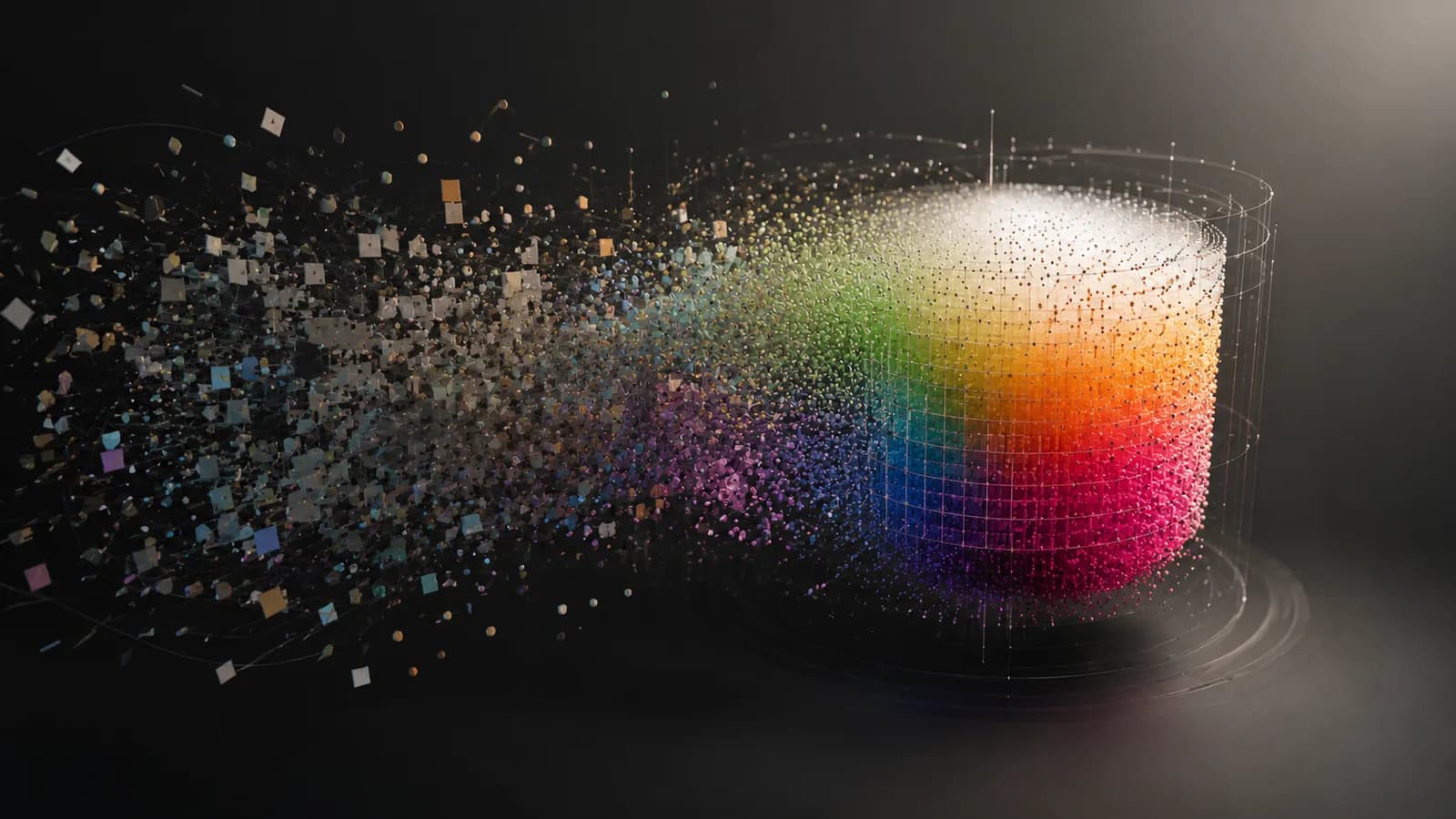
The Color Experience System — a Bridge Between Color Research and Color Choice
The Color Experience System: the missing layer that translates an intended experience into a defensible color region in CIE LCh*. What it is and why it works — presented at AIC 2026 in Florence.

Contextual Color Perception: How Environment Influences Color
Color perception is context-dependent. Identical color samples can appear different due to background color, light, or spatial configuration. Simultaneous contrast amplifies differences - a gray on red appears greener. Discover how context influences color assessment.
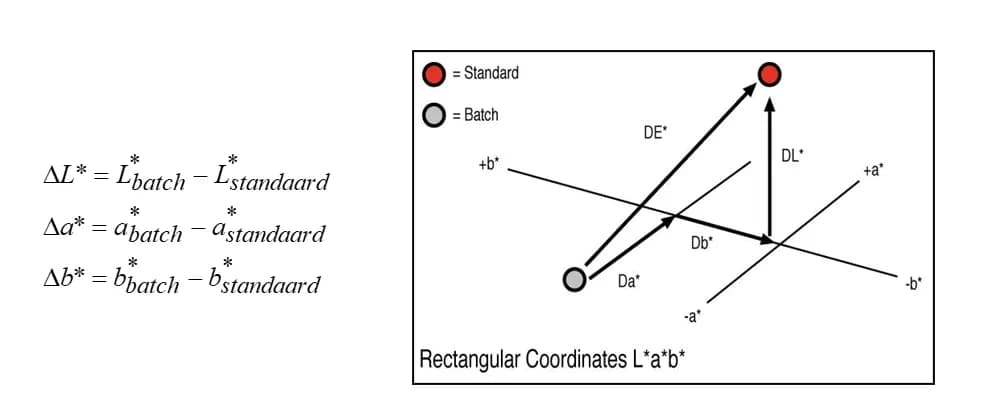
Calculating Color Differences in CIELAB: ΔE and Components (Part 4)
In CIELAB, the difference between two colors is described as the distance between their coordinates. Learn how ΔE*ab is calculated, what ΔL*, Δa*, and Δb* mean, and why modern formulas like ΔE00 are needed.
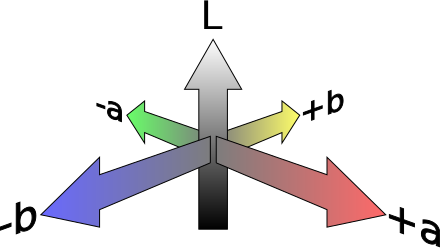
CIELAB and CIELUV: Uniformity in Color Measurement (Part 3)
CIELAB and CIELUV were introduced in 1976 as approximately uniform color spaces. Learn the structure of CIELAB with L*, a*, b*, the conversion from XYZ, and the use of polar coordinates C*ab and hab.
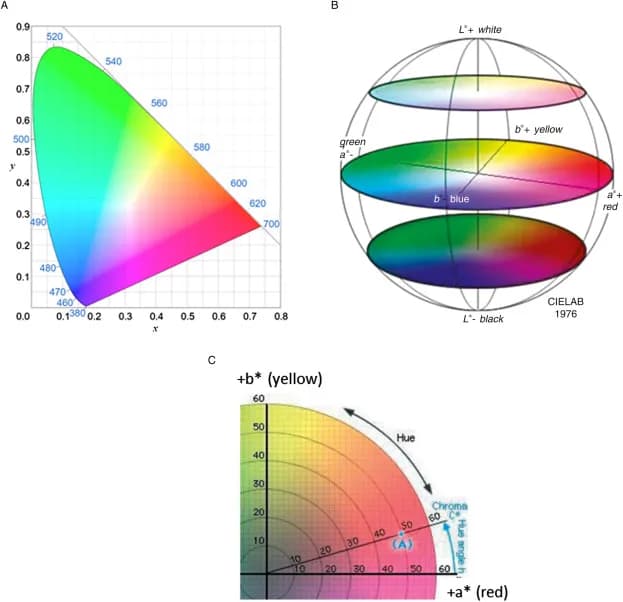
CIELAB: From XYZ to x,y,Y and MacAdam Ellipses (Part 2)
Tristimulus values XYZ are translated in practice to x,y,Y coordinates. However, the x,y diagram is not perceptually uniform, as MacAdam demonstrated with his famous ellipses - an important motivation for CIELAB.
CIELAB: The Basis of Color Measurement (Part 1 - CIE and XYZ)
CIELAB is one of the most important systems in colorimetry. Discover the origins of the system, the role of the CIE, and the basis of the XYZ tristimulus values from which CIELAB is derived.

What Skills Do You Need as a Color Expert?
Working professionally with color requires more than a good feeling. Discover what knowledge and skills are needed to work systematically and substantiated with color as a color expert in interior, architecture and industry.
The Maze of Angles in Color Measurement
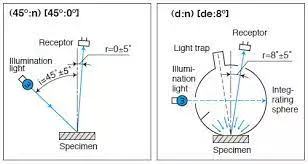
Why don't color measurements match? The cause often lies in confusion between measurement geometry and Standard Observer. This article explains the difference and why both concepts are crucial.

What Is the Influence of Light on Color in the Work of a Color Assessor?
Light determines how color appears. Why metamerism occurs, how light booths work, and why D65 is the standard for professional color assessment.

The Effect of Light on Color
Color perception is directly dependent on the light source. This article explains why two identical facade panels can show visually different colors, despite identical measurements.