Laden...
Laden...
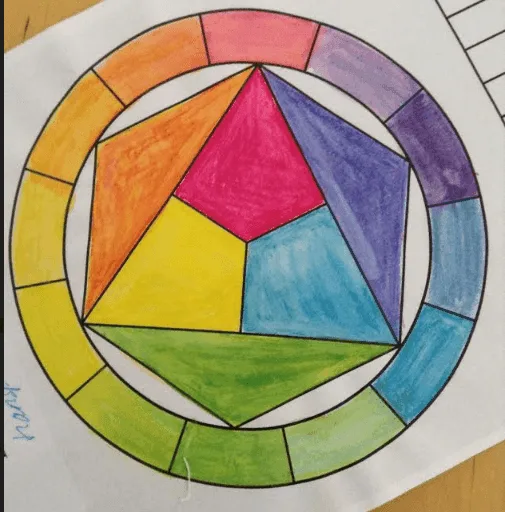
At the AIC color congress Colour & Human Comfort in Lisbon (2018), a remarkable statement was made: "Itten is passé." The remark was intended to mark a shift that has been underway within international color research for some time: Johannes Itten's color theory forms an important historical foundation, but is no longer sufficient for contemporary color professionals.
In virtually all Dutch educational programs, Itten's color theory still forms the starting point:
Many professional groups — interior consultants, stylists, designers — also use Itten's models as their main reference. This is understandable, given the historical value of his work within the Bauhaus.
But Itten worked primarily from painterly color mixing with opaque paint. His system is therefore not universal and inadequately explains many modern color phenomena.
Since Itten's work, a large number of researchers have looked more deeply, broadly, and empirically at color perception, color behavior, and color interaction. Some examples:
In addition, fundamental insight has been added in color science, psychophysics, visual perception, light sources, color measurement, and digital color standards — topics that are hardly or not at all covered by Itten.
Itten defined the primary colors as red, yellow, and blue. However, this depends on:
In modern color models, primary colors are for example:
Painter Michael Wilcox convincingly described in Blue and Yellow Don't Make Green that the classical mixing rules from Itten's time often do not correspond to actual pigment behavior.
The consequence: those who follow only Itten miss important nuance in how color behaves physically and perceptually.
For interior consultants, stylists, industrial designers, and other specifiers, this means that working with only Itten leads to a limited understanding of color. Many current design and quality issues require knowledge about:
Color science has expanded significantly in recent decades — and that requires a contemporary approach.
The essence of the statement "Itten is passé" is not that his work is irrelevant, but that a modern color professional needs much more than the classical Bauhaus model.
Color application in design, architecture, interior, product development, and communication requires current, scientifically substantiated insights.
Do you want to look beyond classical color theory and work with modern insights from color perception, observation, material behavior, and color technology?
In the courses of the Dutch Color School, you will learn:
👉 Take the Color Consulting course at: https://kleurenschool.nl
The course for professionals who want to update and deepen their color knowledge.
Questions about modern color science or color courses? Contact the specialists at the Netherlands Color Institute: https://snki.nl/en/contact