

A color error costs more than the visible rejection: the hidden costs run up to 2 to 3 times as much. What color quality really costs — and why investing in color control pays itself back.
Color is often seen as a matter of taste or appearance. In production and quality control it is something else: a hard economic factor. A "small" color deviation can cause an entire batch to be rejected, and the bill runs higher than most companies think.
1. Color Determines Whether People Buy
Start on the revenue side. In textiles, color determines 60 to 80% of a consumer's first reaction to a garment. And the perception of color quality influences buying behavior by 18 to 42%, depending on product category and target group — even higher for premium products. Color consistency is linked to quality, and customers pay more for it. Anyone who does not have color in order is thus already leaving revenue on the table at the front end.
2. The Visible Failure Costs
On the cost side, the direct failure costs are the easiest to see. At a manufacturer of household textiles, color-related failure costs amounted to 12% of total production costs — 8% rework, 4% complete rejection. A mid-sized textile manufacturer had to rework 8% of production annually due to color deviations, amounting to over €280,000. In automotive paint, the amounts climb even faster: a reformulation can cost up to €100,000, and a production stop due to color problems up to €30,000 per hour.
3. The Hidden Costs Are Two to Three Times Larger
Here lies the real surprise. The hidden costs of poor color control run up to two to three times the visible failure costs. They sit in things that do not appear in the books as a "color problem": overspecification of pigments to mask variation (5 to 12% higher material costs without added value), extended development time and missed seasonal sales, production capacity consumed by rework, and extra safety stocks in the chain. A food producer that had to recall a packaging line had €150,000 in direct costs — but the missed revenue was estimated at more than €500,000.
4. Investing in Color Quality Pays Itself Back
The good news: the business case is usually positive. A fashion chain struggling with 8% returns due to color mismatches invested in measuring equipment, software and training, brought the returns down to 2.5% and saved a multiple of the investment annually — with a payback time of months, not years. As a rule of thumb, instrumental investments pay themselves back in 6 to 18 months, training programs in 3 to 9 months, and complete systems in 18 to 36 months.
5. What This Gives You
If you have to defend an investment in color control internally, do not calculate only with the rejection figures everyone sees. Include the hidden costs — overspecification, development time, chain complexity, missed revenue — because that is where the largest part sits. This shifts the conversation from "color is a cost item" to "color control is an investment with a payback time". For the instrumental part, the ColorReader Pro is an accessible starting point, and the Color Assessment program lays the foundation for the human part.
Source: Kotterink, M. (2025). Kleurbeoordelen in de Praktijk — Deel 1: Theoretische Grondslagen, chapter 2 (Kleurkwaliteit en Rendement). Uitgeverij SNKI. With data from AIC proceedings, Journal of the Society of Dyers and Colourists and X-Rite Pantone, among others.
Frequently asked questions
What does a color error cost in production?
More than the visible rejection. On the revenue side, color determines 60–80% of the first consumer response to clothing, and color quality influences buying behavior by 18–42%. On the cost side there are direct failure costs (in household textiles 12% of production costs; automotive paint reformulation up to €100,000; production stop up to €30,000/hour), but the hidden costs — overspecification of pigments (5–12% higher material costs), missed development time and revenue, chain complexity — run up to 2 to 3 times the visible failure costs. Investments in color control generally pay themselves back in months to a few years (instruments 6–18 months, training 3–9 months, complete systems 18–36 months).
Related articles
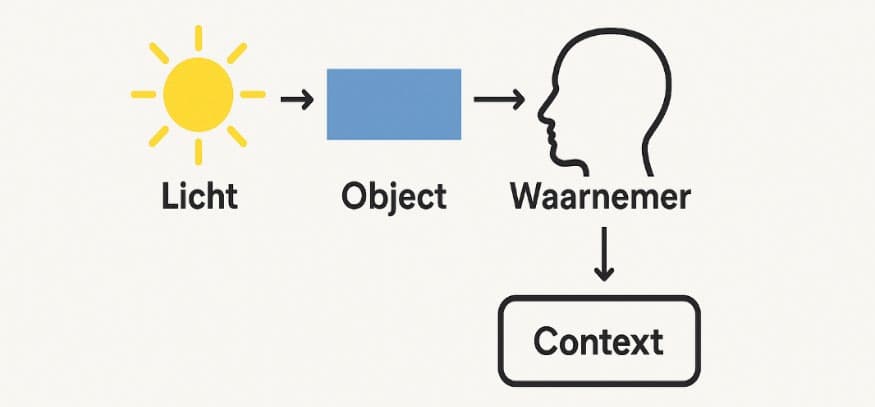
Understanding Color Perception: Four Factors That Determine Every Assessment
Color is not a property of an object, but a perception. Four factors — light source, object, observer and context — together determine what we see. Understand these components and take control of your color assessments.
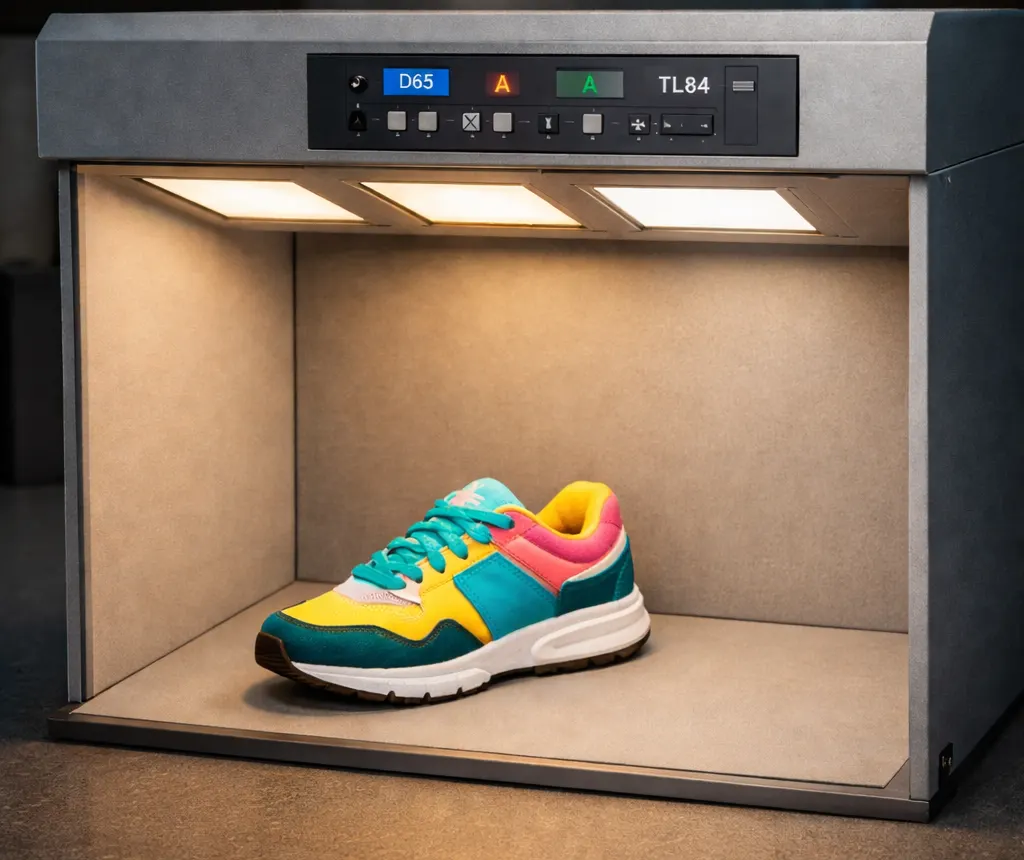
Light Sources and Color Assessment: Why the Right Lighting Determines Everything
Light is not neutral. Every light source has its own spectral composition that directly determines which colors you can perceive. Understanding SPD, color temperature and CRI is the basis of reliable color assessment.

To What Extent May Color Deviate?
How large can a color difference be before a product is rejected? Why tolerances depend on the product, material, and market — and how to establish them.