Laden...

Laden...
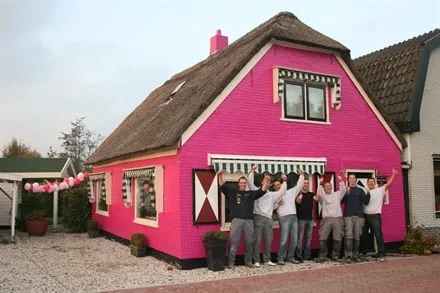
Everything is possible. Have you ever heard that expression? It means you can combine all colors. Of course you can combine all colors. The question is whether it looks good. Or is functional. Or appropriate for the context.
What matters in color application is that people are always seeking balance — harmony. If it's not there, we feel uncomfortable. Sometimes consciously, more often unconsciously. This is not a matter of taste. It is a physiological response.
Color designers bear great responsibility in this. Lack of harmony equates to a negative impact on well-being — in a home, a work environment, a healthcare facility, or a public space.
Our visual system constantly demands balance. This is visible in the physiological process of simultaneous contrast and afterimages.
When we look at a color, the brain produces a complementary light image. If you look at a red surface for a long time and then shift your gaze to a white surface, you will see a greenish afterimage. This is not an illusion — it is the visual system actively seeking balance.
This process also works when colors are placed next to each other:
Anyone who understands how this physiological process works and takes it into account will rarely propose a disharmonious design.
Professional color application is not just about color harmony in the classical sense. There are three levels:
| Level | Question |
|---|---|
| Color harmony | Do the color tones match each other? |
| Harmony in color usage | Are the proportions, saturation, and lightness in balance? |
| Functional harmony | Does the color choice fit the function, the user, and the context? |
A color plan can be correct in terms of color harmony, but completely miss the mark functionally — for example, a highly saturated color scheme in a concentration space, or a cool color palette in a space that should radiate warmth and security.
Unfortunately, many color plans are created in which one or more of these harmony levels are lacking. Not out of unwillingness, but from a lack of knowledge about how color works physiologically and psychologically.
Everything is possible? If you are aware of your responsibility as a color designer and have the well-being of the user in mind, then you know for certain: not everything is possible. Not everything is beautiful. And not everything is appropriate.
The art lies in knowing why something does work — and that begins with understanding color perception, color harmony, and the context in which color is applied.
Related services:
Related articles:
Color in healthcare environments is not decoration but a design decision with effects on stress, recovery and safety. What works per room — from waiting room to dementia care.
From gray apartment blocks to neutral interiors – the Netherlands suffers from double chromophobia. Scientific research shows: colorless environments harm well-being, creativity, and social dynamics. Hospitals use color to heal, but where do healthy people live?
Consumer behavior is largely determined by color. How color harmony, aesthetics, and color association influence the perception of quality and attractiveness.