Laden...
Laden...
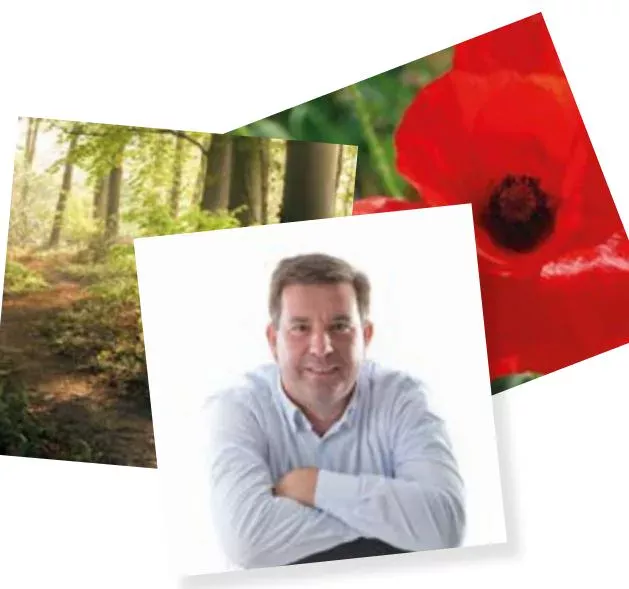
Color plays a major role in many professional practices, but for some people color also forms part of their personal history. In this blog, Mark Kotterink – director of the Netherlands Color Institute – shares his personal story. A story about craftsmanship, family, development and the special legacy of a pioneer in professional color technology.
"My father passed away in 2021. For everyone comes the moment when you lose a parent, but in my case this also means that a lifetime of color experience and craftsmanship took on a different perspective. Because color is not just an area of professional interest for me; it runs like a red thread through my life. That's because of my father, Maas Kotterink.
My father studied chemistry at the HTS in Almelo and started his career at chemical company Servo. Later he became responsible at paint factory Pieter Schoen for the development of color recipes. His exceptional ability to recognize color differences and precisely control pigments formed the foundation for his next step: in 1976 he started Total Color Technics. I was two years old then."
"With Total Color Technics, my father supported paint factories and companies working with color development. He focused on more efficient recipe development, pigment theory and accurate matching processes. Additionally, he represented ACS and became the first European distributor of the Natural Colour System in the early 1980s. He also acquired the distributorship of Verivide standard light systems for the Benelux.
He also developed a unique, independent course Applied Color Technology, in which he transferred his knowledge to professionals. In the 1990s I helped in the business: shipping orders, contact with customers, and at the same time I developed my own interests. I studied Business Economics and worked for a while in product photography. But life went differently than planned."
"My brother Arjan would take over the family business. When he passed away far too early in 2004, everything changed. Suddenly everything fell into place. I took over the business. It felt like it had to be this way, even though the reason was sad."
"I continued the business under the name Nederlands Kleuren Centrum (NKC). The demand for color knowledge and color experience continued to increase, leading to the establishment of the Dutch Color School in 2008. In 2018 this became the current Stichting Nederlands Kleur Instituut (SNKI): an independent knowledge platform that researches, develops and makes accessible color application, color experience and color technology for professionals.
Today we still build on the foundations my father laid in 1976. Until his sickbed he remained involved, advising and passionate. I can do nothing other than continue that work: sharing knowledge, strengthening the industry and contributing to a professional, substantiated and responsibly applied color world."
"Our mission has remained the same: helping professionals work with color in a well-considered, responsible and reasoned way. Because good color application contributes not only to quality, but also to safety, experience, wellbeing and harmony in our living environment."
Mark Kotterink Director Netherlands Color Institute Authority in color knowledge, color application and color technology
The trainings of the Dutch Color School build on decades of experience and craftsmanship. From basic to advanced, from theory to practice.
👉 Visit the trainings at: https://kleurenschool.nl
Want to Know More About the History and Mission of the Netherlands Color Institute? Contact us: https://snki.nl/en/contact
The municipality of Den Helder demands that a bright green house be repainted: the color is allegedly not a pastel color. But what are pastel colors exactly? An analysis using the NCS system.
The NCS color image consists of black + white + saturation = 100%. Therefore, the sum of blackness and saturation can never be 100 or more. Here's the explanation.
NCS colors that start with 00 are first edition notations from 1979 — discontinued since 1995. Why they still appear, what the difference is and what to look out for.