Laden...

Laden...
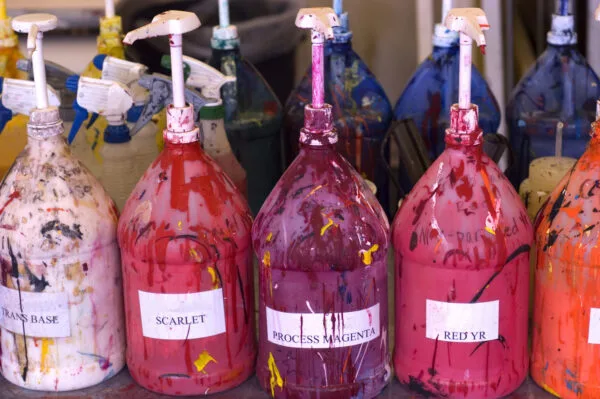
Color matching is a technical process where small deviations in pigment dosing, equipment, light conditions, or working methods can quickly lead to visible color differences. Consistent process control is therefore essential for quality, efficiency, and preventing mistints. The following guidelines form the basis for a reproducible and manageable color matching process.
Choose binders, base paints, and pigment pastes from reliable suppliers. Consistent raw materials reduce the chance of variation between batches.
Important quality criteria:
Color matching requires knowledge of:
Operator errors are one of the most common causes of mistints. Regular training prevents variation.
Good results are only possible when equipment functions within specification.
Check:
Dust, residue, or dried pigment residues can directly lead to color shift.
Practical points of attention:
Digital systems accurately calculate which pigment dosages are needed.
Advantages:
Color assessment ideally takes place under:
Varying light = varying assessment = greater chance of error.
A good color management process contains:
This prevents deviations in follow-up productions and makes quality control traceable.
First make a small test batch:
This prevents product loss with large volumes.
Incompatibility can lead to:
Check chemical compatibility between pigment paste and base system.
Aged or degraded pigment pastes give unpredictable results. Regular quality control of pigment viscosity and homogeneity is necessary.
QC can consist of:
Mistints are thus detected and corrected as early as possible.
When end users mix themselves:
This prevents complaints due to user errors.
Color matching is a technical process where reproducibility is entirely dependent on procedures, material control, instrumental discipline, and operator skill. By integrating the above measures into the production process, the number of mistints can be drastically reduced.
In the Applied Color Technology course at the Dutch Color School, you will learn:
👉 View the course at: https://kleurenschool.nl
Questions about color matching or color formulation? Contact the specialists at the Netherlands Color Institute: https://snki.nl/en/contact
Color deviations arise from variation in material, process, measurement, or specification. 42% is directly linked to process variation. Discover the technical framework for systematic diagnosis with five core steps and RCA methods.
Color difference formulas objectively quantify the difference between two colors. Discover the main formulas - CIE76, CMC, CIE94, and CIEDE2000 - their strengths and when to use which formula.
In CIELAB, the difference between two colors is described as the distance between their coordinates. Learn how ΔE*ab is calculated, what ΔL*, Δa*, and Δb* mean, and why modern formulas like ΔE00 are needed.