Laden...

Laden...
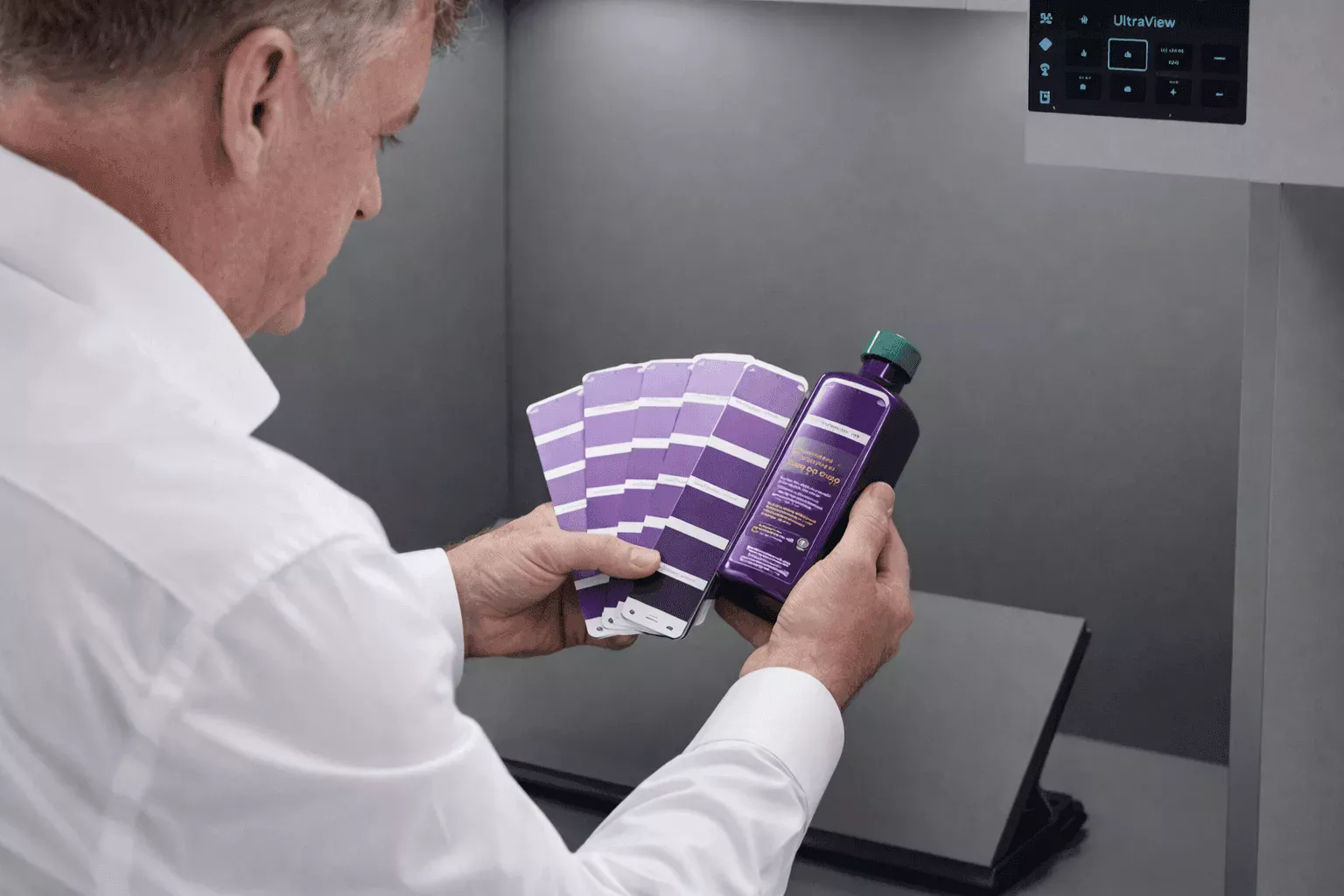
While instrumental color measurement only produces objective values, humans can do something with visual assessment that an instrument cannot: interpret observation. This makes the quality of the assessor crucial. Below are the most important conditions that a color assessor must meet.
An assessor must be screened in advance for color vision. Various tests exist for this:
A deficiency in color perception does not automatically mean someone is unsuitable, but does mean the limitations must be known.
Besides color vision, an assessor must be able to distinguish detail. Relevant tests are:
These properties determine to what extent someone can reliably assess small nuance differences.
After selection follows training. An assessor must learn:
Visual assessment is a cognitive task. Fatigue, habituation or boredom affect the reliability of observations.
The location of the assessment partly determines the outcome. Important factors:
A light booth with standardized light prevents disturbance from environmental colors and enables consistent assessment.
Color assessment is a profession that you can learn and train. SNKI developed a program for strengthening color perception ability and methodical assessment.
In the trainings of the Dutch Color School you will learn:
👉 Visit for trainings and courses: https://kleurenschool.nl
Questions about visual color assessment or training? Contact the specialists at Stichting Nederlands Kleurinstituut: https://snki.nl/en/contact
Even the best color assessor has a biological limit. Why two or more assessors judge more reliably — and how the 2+1 method makes that practical and affordable.
A spectrophotometer approves the color, but your eye sees a difference. Why that happens — metamerism, spot measurement, Delta E — and which decision rule to use.
Color is not a property of the object but a perception. Discover the three ingredients — light source, object, observer — and the three knobs hue, lightness and saturation.