

Why Your Eye Sees Less Sharply After an Hour
The eye is an instrument that tires, without an error message. Why your color judgment dulls after an hour — and with which simple rules you take critical decisions at the right moment.

Why Two Assessors See Better Than One
Even the best color assessor has a biological limit. Why two or more assessors judge more reliably — and how the 2+1 method makes that practical and affordable.
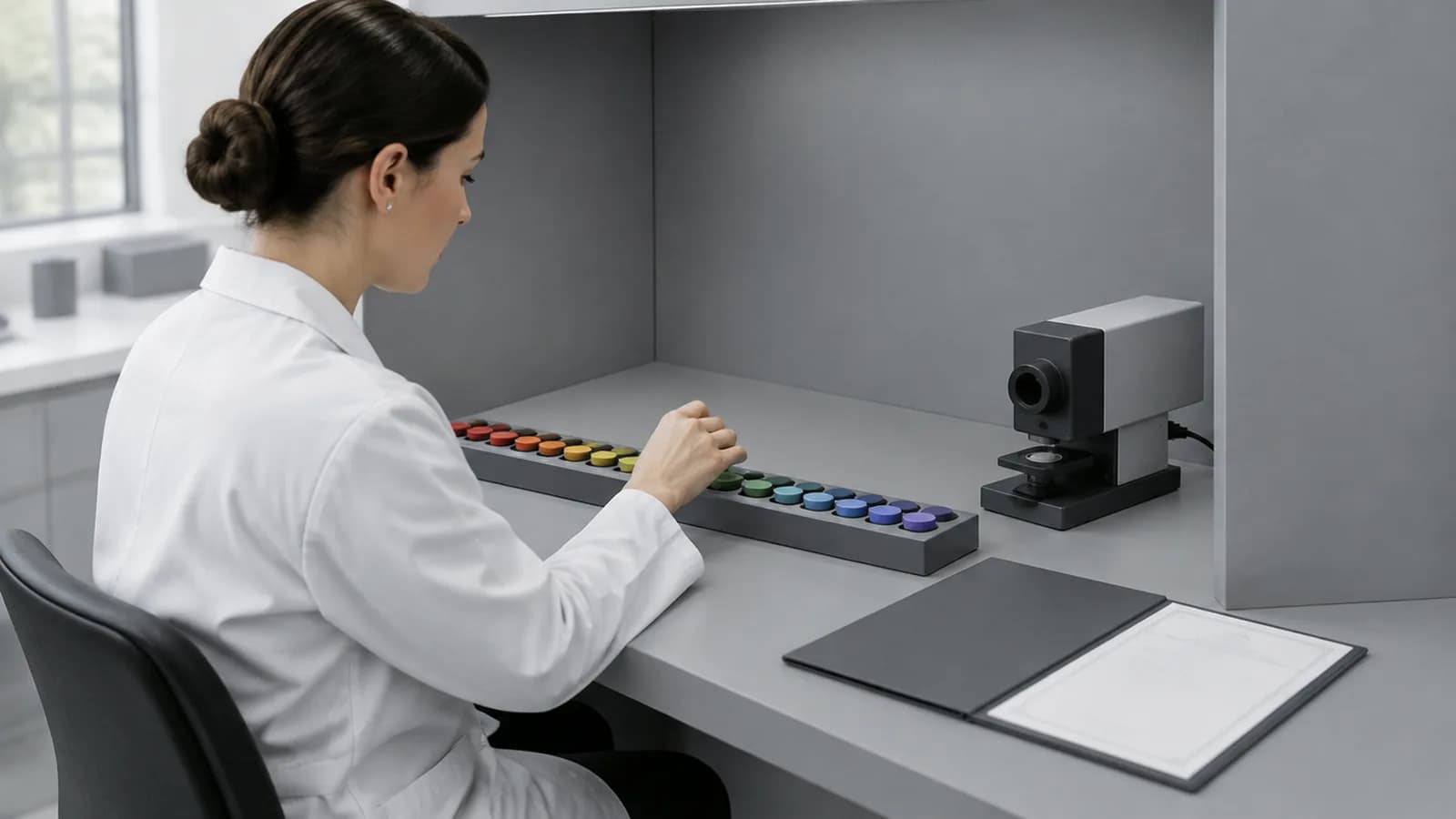
Your Measuring Equipment Is Qualified — and the Human Who Assesses the Color?
Your measuring equipment is qualified — but the human who assesses the color? ASTM E1499 requires demonstrable observer competence. How ColorAptitude measures, certifies and makes it auditable.

Metamerism Detection in the Supply Chain
How metamerism causes color deviations under different light sources and which measurement methods can detect it.

Team Training in Color Quality: From Individual Knowledge to Organization-Wide Standards
From individual color knowledge to organization-wide standards: team training as the key to consistent color quality. Including implementation approach, KPIs, and proven ROI up to 800%.

Analyzing Color Deviations: From Symptom to Cause
Color deviations arise from variation in material, process, measurement, or specification. 42% is directly linked to process variation. Discover the technical framework for systematic diagnosis with five core steps and RCA methods.
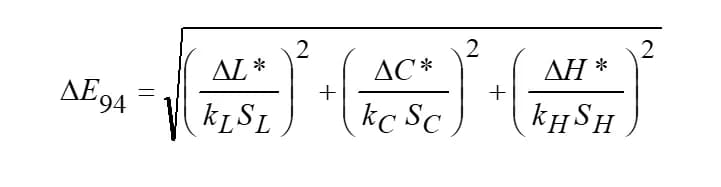
Color Difference Formulas Explained: CIE76, CMC, CIE94, and CIEDE2000
Color difference formulas objectively quantify the difference between two colors. Discover the main formulas - CIE76, CMC, CIE94, and CIEDE2000 - their strengths and when to use which formula.
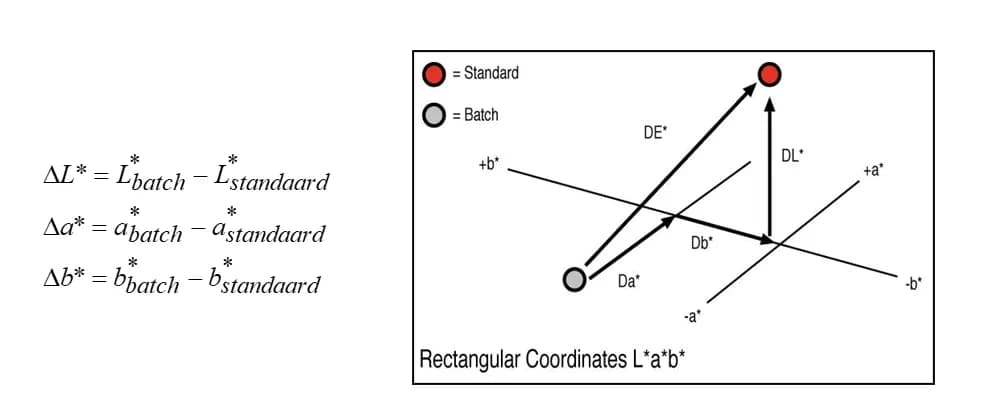
Calculating Color Differences in CIELAB: ΔE and Components (Part 4)
In CIELAB, the difference between two colors is described as the distance between their coordinates. Learn how ΔE*ab is calculated, what ΔL*, Δa*, and Δb* mean, and why modern formulas like ΔE00 are needed.
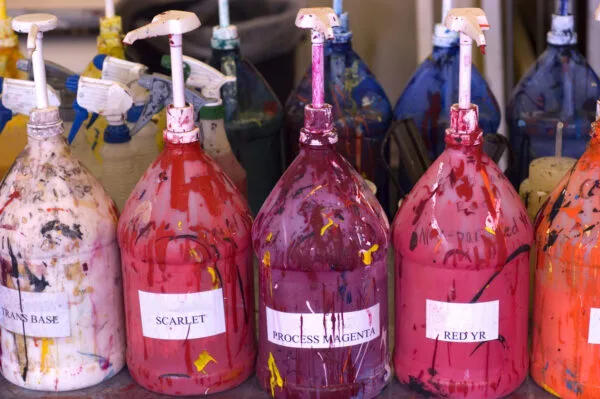
How Do I Reduce Errors in Color Matching?
Small deviations in pigment dosing, equipment, or working methods quickly lead to visible color differences. Learn the 12 essential guidelines to prevent errors in color matching and ensure a reproducible process.

Inter-Instrument Agreement: What Does It Mean?
Inter-instrument agreement describes the extent to which different instruments produce the same color values. This article explains why this is essential and how to measure it.
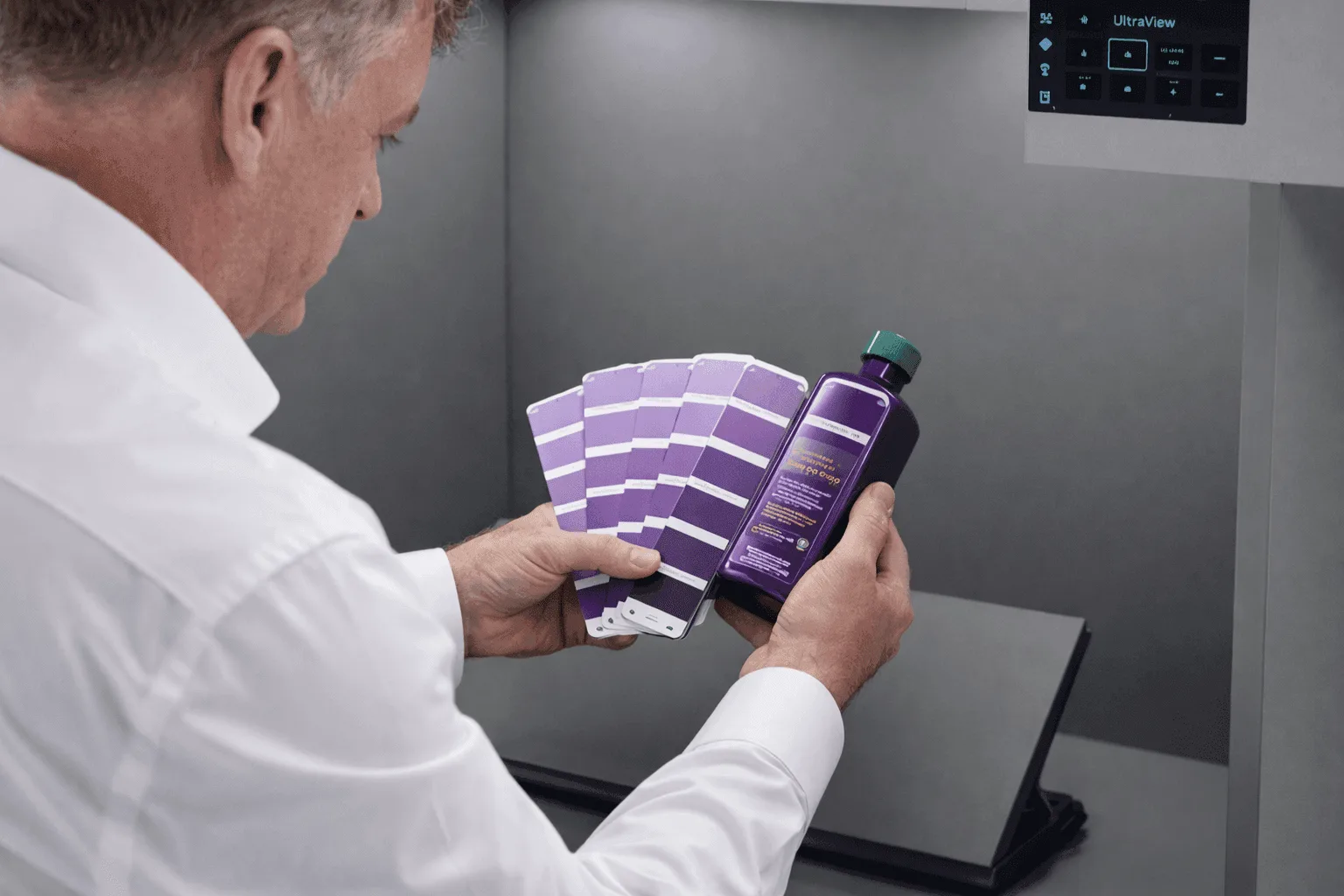
What Requirements Must an Assessor Meet to Properly Assess Colors?
Visual color assessment requires more than just good vision. This article describes the four most important requirements that a professional color assessor must meet.