

The Ten Most Common Mistakes in Measuring and Assessing Color
A color measurement rarely goes wrong because of the instrument, but because of the conditions around it. The ten most common mistakes in measuring and assessing color — and how to avoid them.
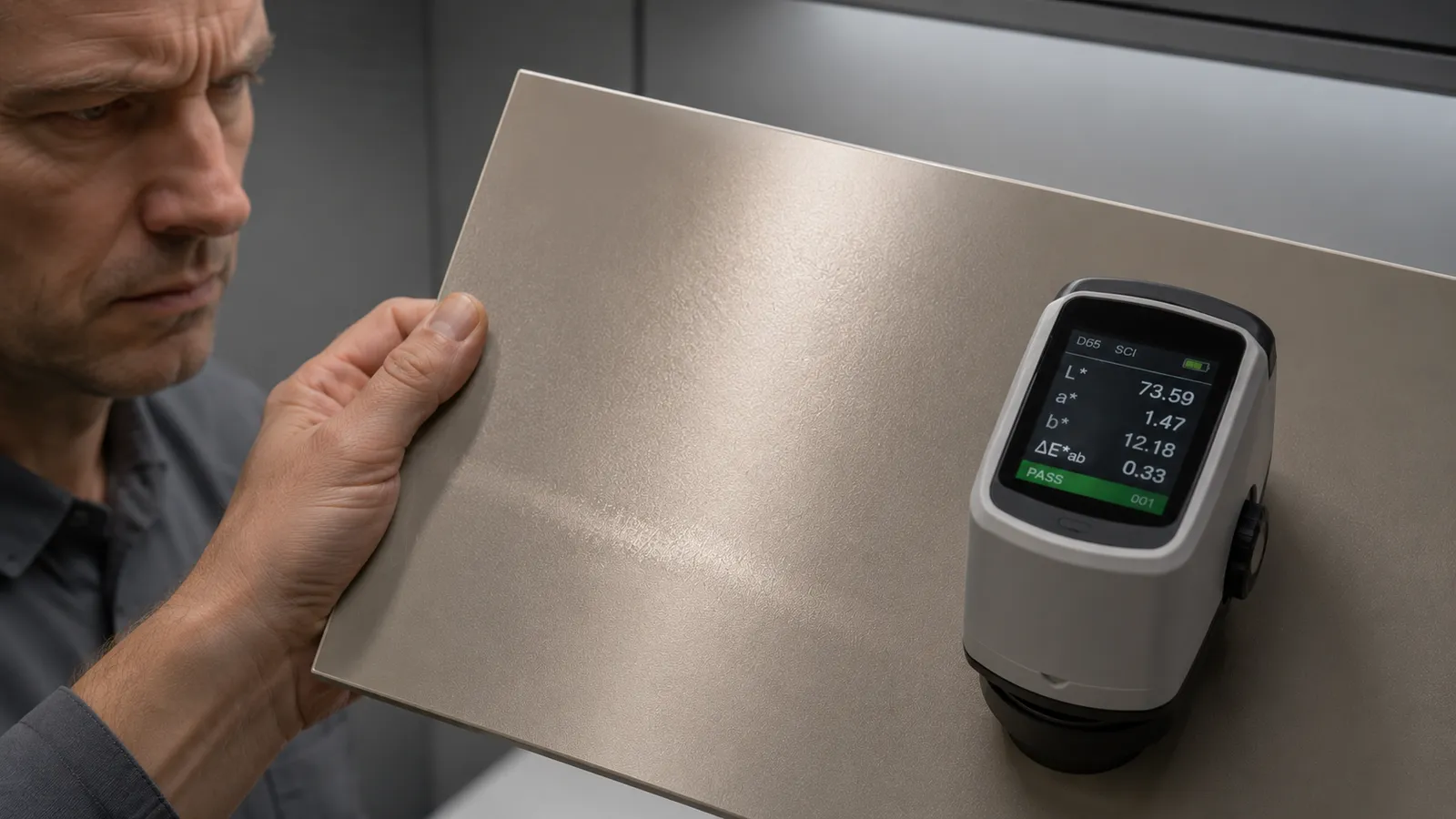
The Meter Said Pass. Your Eye Said Fail. Who Was Right?
A spectrophotometer approves the color, but your eye sees a difference. Why that happens — metamerism, spot measurement, Delta E — and which decision rule to use.
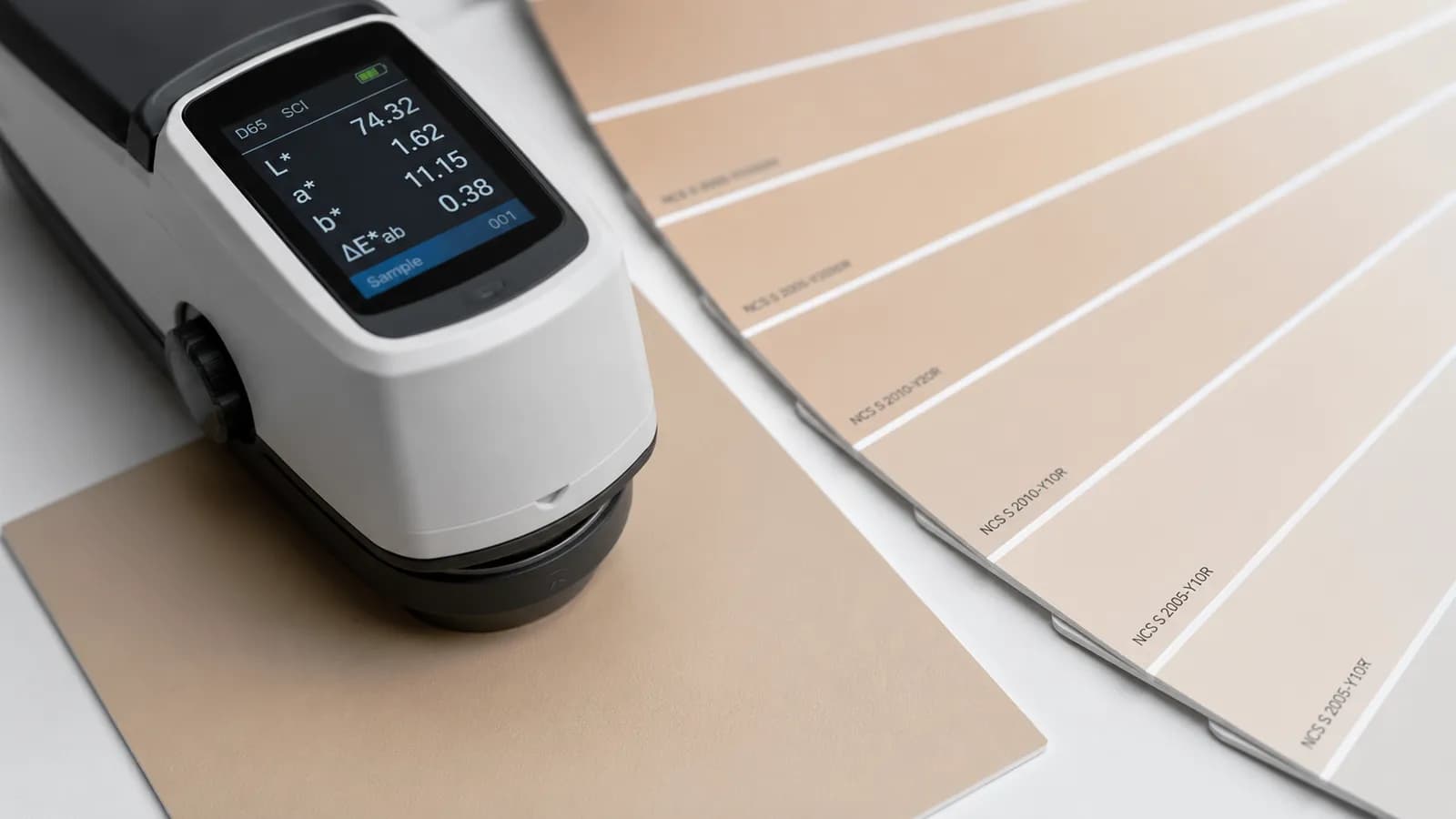
'Slightly Warmer' Is Not a Color Agreement — How to Specify Color for Your Supplier with L*a*b* and ΔE
You agree on color with a supplier not with words but with L*a*b* and ΔE. This is how you record color, tolerance and measurement conditions unambiguously — and avoid surprises at delivery.

To What Extent May Color Deviate?
How large can a color difference be before a product is rejected? Why tolerances depend on the product, material, and market — and how to establish them.
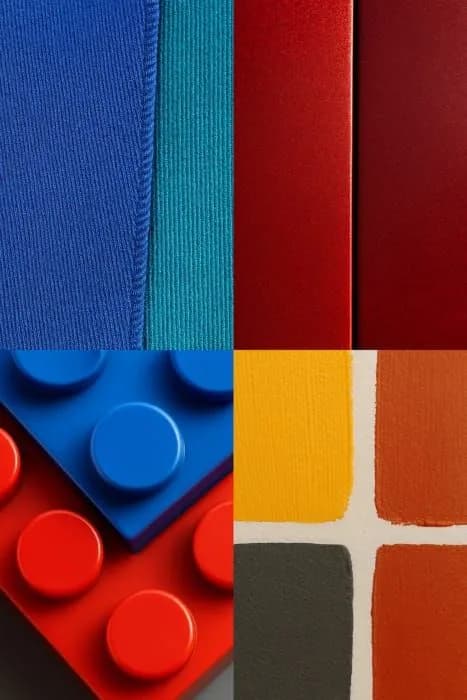
Color Quality Across Materials: From Textile to Digital
Color quality is determined by the interaction between light and material. Discover material-specific color challenges in textiles, plastics, coatings, and digital media, with practical guidelines from industrial applications.
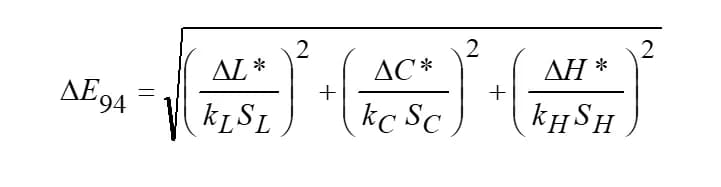
Color Difference Formulas Explained: CIE76, CMC, CIE94, and CIEDE2000
Color difference formulas objectively quantify the difference between two colors. Discover the main formulas - CIE76, CMC, CIE94, and CIEDE2000 - their strengths and when to use which formula.
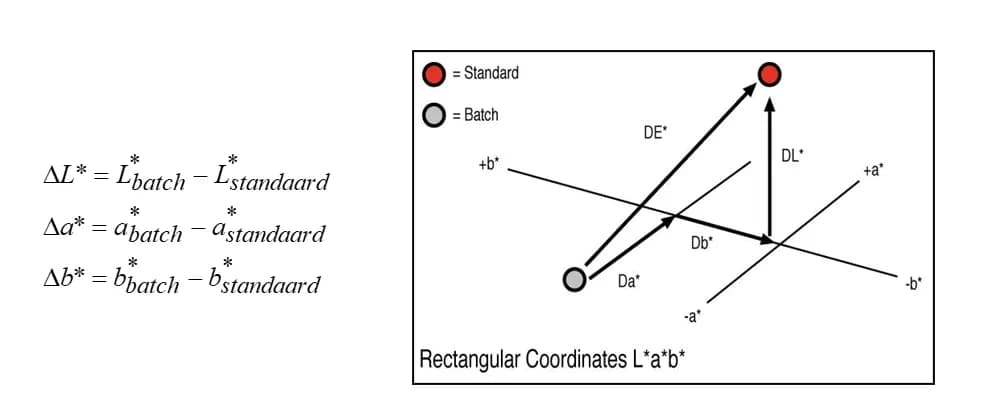
Calculating Color Differences in CIELAB: ΔE and Components (Part 4)
In CIELAB, the difference between two colors is described as the distance between their coordinates. Learn how ΔE*ab is calculated, what ΔL*, Δa*, and Δb* mean, and why modern formulas like ΔE00 are needed.