
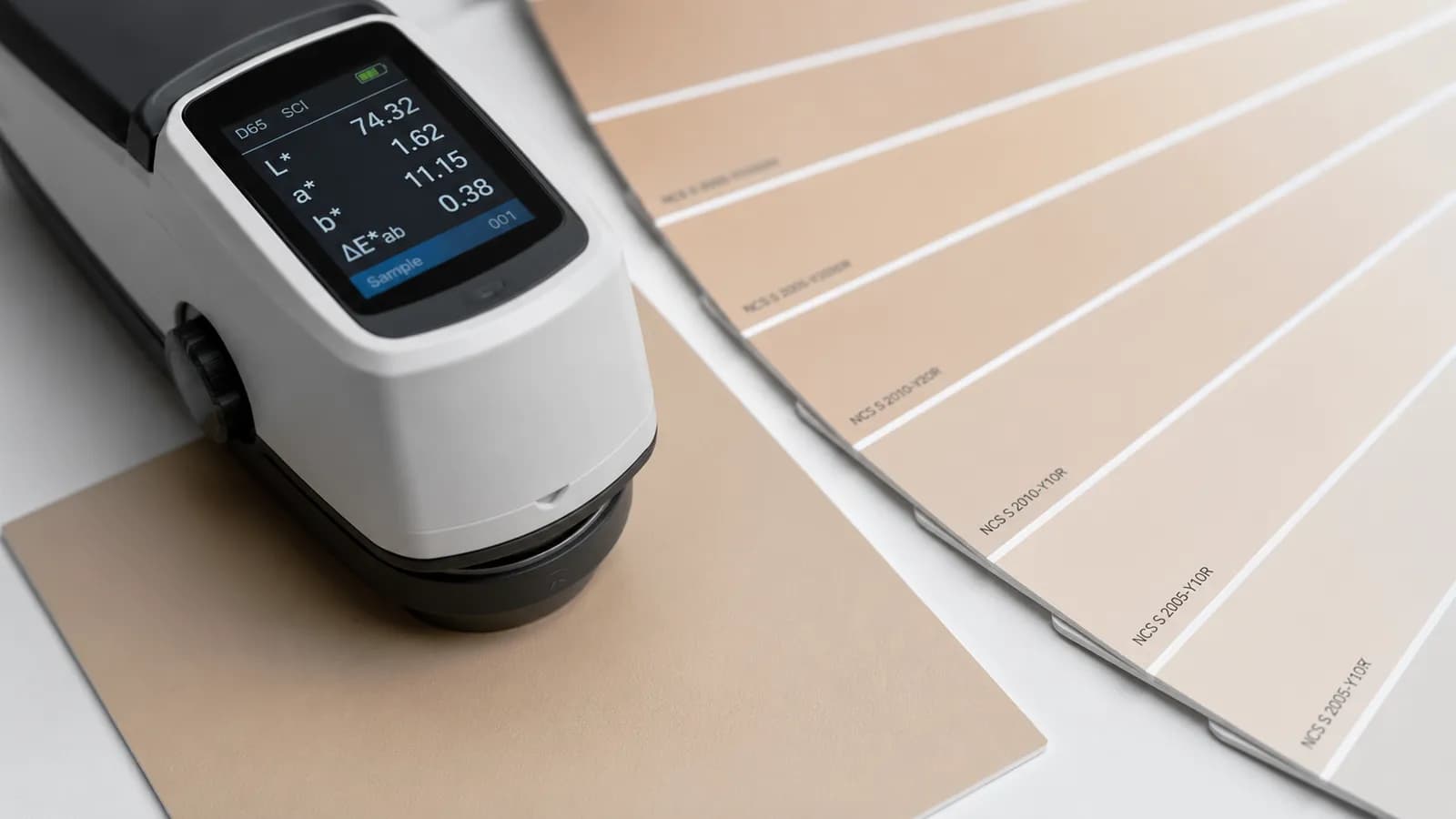
'Slightly Warmer' Is Not a Color Agreement — How to Specify Color for Your Supplier with L*a*b* and ΔE
You agree on color with a supplier not with words but with L*a*b* and ΔE. This is how you record color, tolerance and measurement conditions unambiguously — and avoid surprises at delivery.

To What Extent May Color Deviate?
How large can a color difference be before a product is rejected? Why tolerances depend on the product, material, and market — and how to establish them.
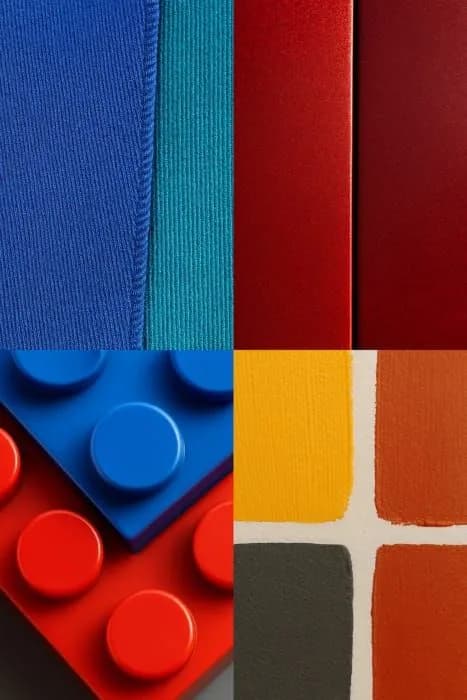
Color Quality by Material: Plastics, Metal, and Textiles
Each material has unique light interactions that require specific measurement methods. Plastics, metals, and textiles each introduce their own challenges for color assessment. Discover material-specific solutions and protocols.
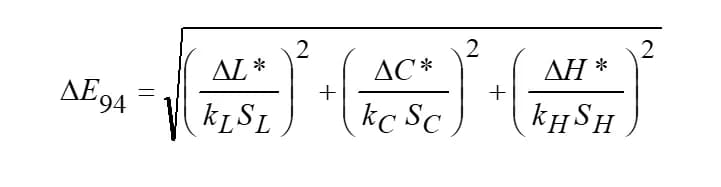
Color Difference Formulas Explained: CIE76, CMC, CIE94, and CIEDE2000
Color difference formulas objectively quantify the difference between two colors. Discover the main formulas - CIE76, CMC, CIE94, and CIEDE2000 - their strengths and when to use which formula.
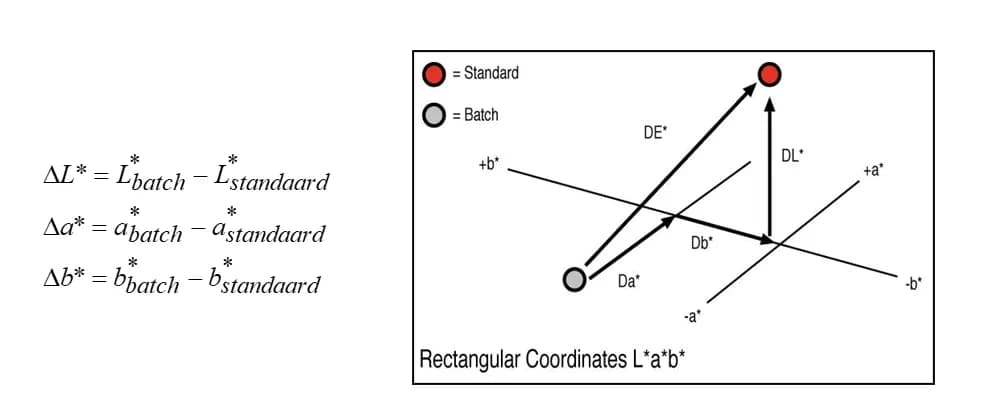
Calculating Color Differences in CIELAB: ΔE and Components (Part 4)
In CIELAB, the difference between two colors is described as the distance between their coordinates. Learn how ΔE*ab is calculated, what ΔL*, Δa*, and Δb* mean, and why modern formulas like ΔE00 are needed.

How Do I Get Consistent and Accurate Measurements?
Accurate color measurements do not happen by accident, but through standardized procedures, technical knowledge, and qualified operators. Learn the 13 essential guidelines for consistent and reproducible color measurements.

All About Color Quality
What do we mean by color quality? This article explains how color quality is defined, measured, and assessed based on nuance, purity, hue, and tolerances.
What Is the Influence of Material on Color in Color Assessment?
Material has a direct influence on how color appears. This case study on concrete slabs shows how structure, porosity, and gloss affect color assessment and how tolerances are determined.