Laden...

Laden...

A spectrophotometer approves the color, but your eye sees a difference. Why that happens — metamerism, spot measurement, Delta E — and which decision rule to use.

Eye and meter both assess color, but not in the same way. When to deploy a color meter, when the trained eye leads, and how to calibrate them against each other.

How large can a color difference be before a product is rejected? Why tolerances depend on the product, material, and market — and how to establish them.

Spectrophotometer validation according to ISO 17025 and ISO 7724: requirements, process, reference standards, and common deviations. Everything about ensuring reliable color measurements.

The measurement environment is just as important as the instrument itself. Temperature, light, vibrations, and contamination directly affect measurement results. Learn how to control environmental factors for reliable color measurements.

Fluorescent colors convert UV radiation into visible light, making them spectacular but also challenging. Learn how to get control of fluorescent colors in measurement, formulation, and quality control.
Accurate color measurements do not happen by accident, but through standardized procedures, technical knowledge, and qualified operators. Learn the 13 essential guidelines for consistent and reproducible color measurements.

The human eye can distinguish millions of color nuances, but is not reliable enough for color-critical assessments without tools. Learn which factors influence visual color perception.

Color Quality Control and Product Colour Management are often confused, but are fundamentally different. CQC objectively measures what a color is, while PCM manages the entire process of how color is consistently reproduced.

Measuring transparent materials is complex due to light transmission, absorption, and scattering. This article explains how to perform reliable measurements with the right preparation and instrumentation.

Inter-instrument agreement describes the extent to which different instruments produce the same color values. This article explains why this is essential and how to measure it.
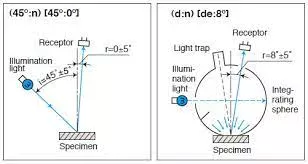
Why don't color measurements match? The cause often lies in confusion between measurement geometry and Standard Observer. This article explains the difference and why both concepts are crucial.

Metamerism is the phenomenon where two colors appear identical under one light source, but visibly differ under another light source. This article explains how metamerism occurs and how to prevent it.

What do we mean by color quality? This article explains how color quality is defined, measured, and assessed based on nuance, purity, hue, and tolerances.

Material has a direct influence on how color appears. This case study on concrete slabs shows how structure, porosity, and gloss affect color assessment and how tolerances are determined.