Laden...

Laden...
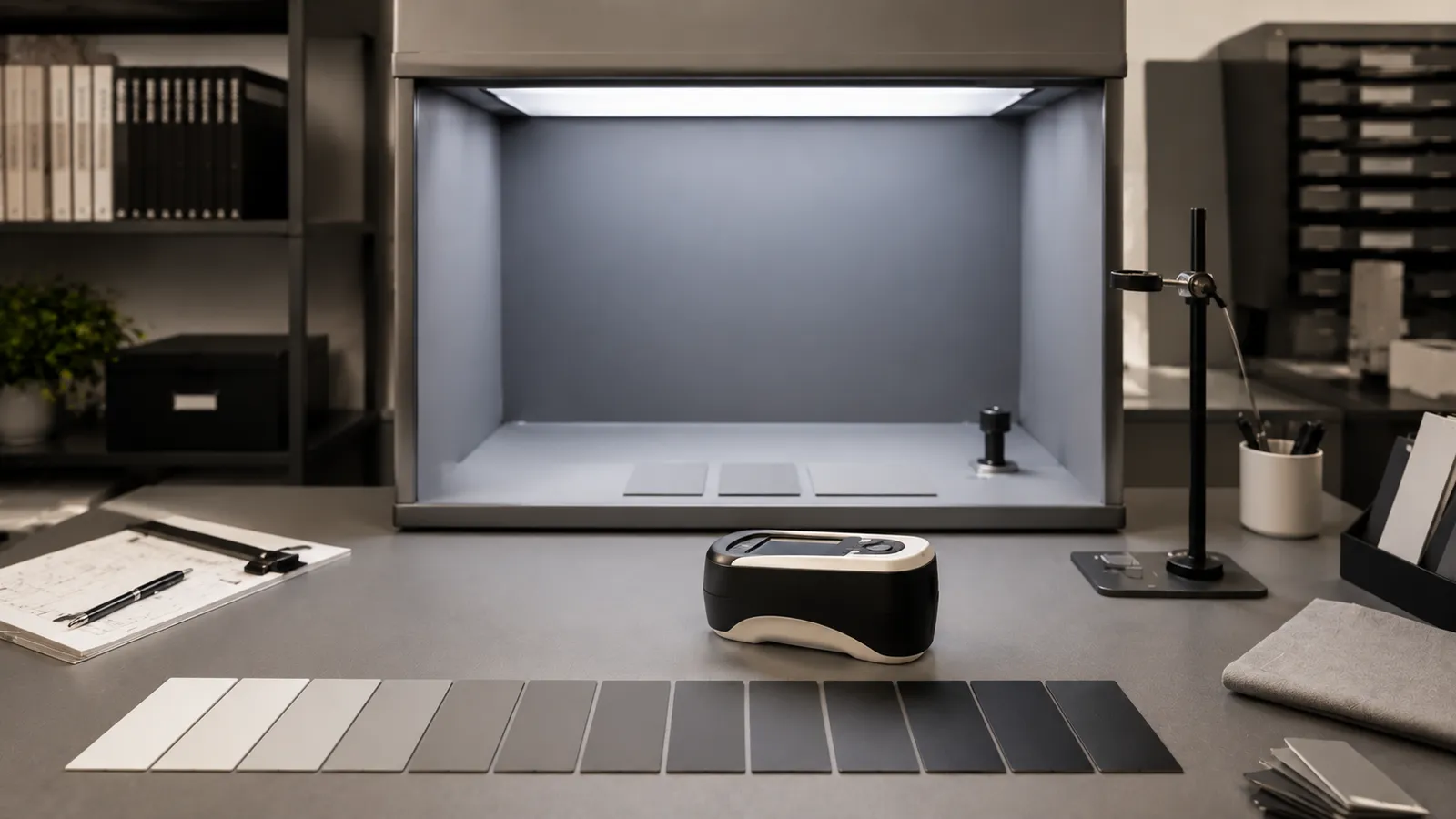
A color measurement rarely goes wrong because of the instrument, but because of the conditions around it. The ten most common mistakes in measuring and assessing color — and how to avoid them.

In a professional color process, 'red' is at least seven different things. Why that distinction is the foundation beneath reliable color management.

A spectrophotometer approves the color, but your eye sees a difference. Why that happens — metamerism, spot measurement, Delta E — and which decision rule to use.

Eye and meter both assess color, but not in the same way. When to deploy a color meter, when the trained eye leads, and how to calibrate them against each other.
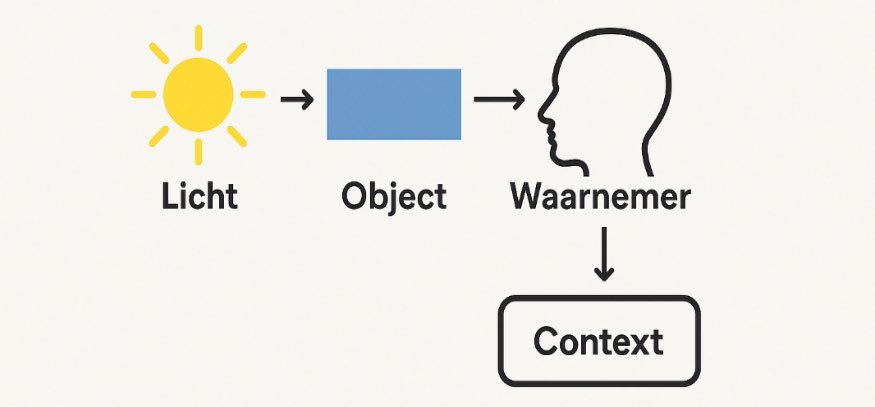
Color is not a property of an object, but a perception. Four factors — light source, object, observer and context — together determine what we see. Understand these components and take control of your color assessments.

Light is not neutral. Every light source has its own spectral composition that directly determines which colors you can perceive. Understanding SPD, color temperature and CRI is the basis of reliable color assessment.

How metamerism causes color deviations under different light sources and which measurement methods can detect it.

Color quality is determined by the interaction between light and material. Discover material-specific color challenges in textiles, plastics, coatings, and digital media, with practical guidelines from industrial applications.

The human eye can distinguish millions of color nuances, but is not reliable enough for color-critical assessments without tools. Learn which factors influence visual color perception.
Metamerism is the phenomenon where two colors appear identical under one light source, but visibly differ under another light source. This article explains how metamerism occurs and how to prevent it.

Color constancy is the ability to perceive a color as stable under different light sources. This article explains how this mechanism works and why it is essential for professional color assessment.

Light determines how color appears. Why metamerism occurs, how light booths work, and why D65 is the standard for professional color assessment.

Visual color assessment is essential for color specialists. This article describes the five most important factors: perception ability, lighting conditions, material, senses and color notation.